Most used for Most used for Skin, Hair, & Nails.
Acetyl‑Hexapeptide‑8 (also called Argireline) is a synthetic peptide made of six amino acids. It mimics part of a protein involved in nerve signaling and reduces the release of neurotransmitters that trigger muscle contractions, leading to a relaxing effect on facial muscles. When applied topically, it helps smooth expression lines and wrinkles in a gentler way than injectable neurotoxins.
FDA-approved for human use
WADA-compliant / allowed in sports
Acetyl-Hexapeptide-8, also known as Argireline, is a synthetic peptide made of six amino acids. It is derived from a fragment of SNAP-25, which is a protein involved in the release of neurotransmitters at the neuromuscular junction.
It is widely promoted for its ability to reduce the appearance of fine lines and wrinkles by influencing the processes that lead to facial muscle contraction. Many cosmetic formulations include it because it may help improve the look of skin smoothness and firmness over time.
Acetyl-Hexapeptide-8 (Argireline) has been shown in preclinical and clinical studies to reduce the depth of wrinkles by modulating neuromuscular activity. A review of cosmeceutical research reported that it may improve skin elasticity and enhance hydration. The peptide can also contribute to more even skin texture and has been investigated for scar remodeling and sebum regulation 1, 2.
In a randomized, placebo-controlled clinical trial of 60 Chinese subjects, topical Argireline applied twice daily for four weeks significantly reduced periorbital wrinkle roughness. Silicone replica measurements showed a 48.9% “anti-wrinkle efficacy” in the Argireline group compared to 0% in the placebo group 3, 4. In a split-face, double-blind trial with 52 Korean women, a microneedle patch containing acetyl-hexapeptide-8 led to statistically significant wrinkle improvement and better skin hydration versus the patch alone 5. Overall, clinical and preclinical evidence supports Argireline’s ability to reduce wrinkle depth, improve skin texture, and promote collagen remodeling.
Acetyl-Hexapeptide-8 (Argireline) has shown very few negative side effects in human studies, and most clinical trials report that it is well tolerated. In a placebo-controlled trial with adult participants, researchers did not observe meaningful irritation, redness, or long-term skin reactions after topical use. Reviews comparing Argireline with botulinum toxin also describe a favorable safety profile with minimal adverse events in human subjects. Overall, existing clinical data indicate that topical application rarely produces significant problems.
Some risks have been noted in more specialized or non-topical settings. An animal-model case report described a Mycobacterium abscessus infection after Argireline was injected rather than applied on the skin, which reflects a procedural issue rather than a property of the peptide itself. Laboratory studies show that very high concentrations can produce cytotoxic effects in cultured cells, although these conditions do not match typical cosmetic use. Taken together, the evidence suggests that Argireline’s negative effects are uncommon and generally mild 6, 7.
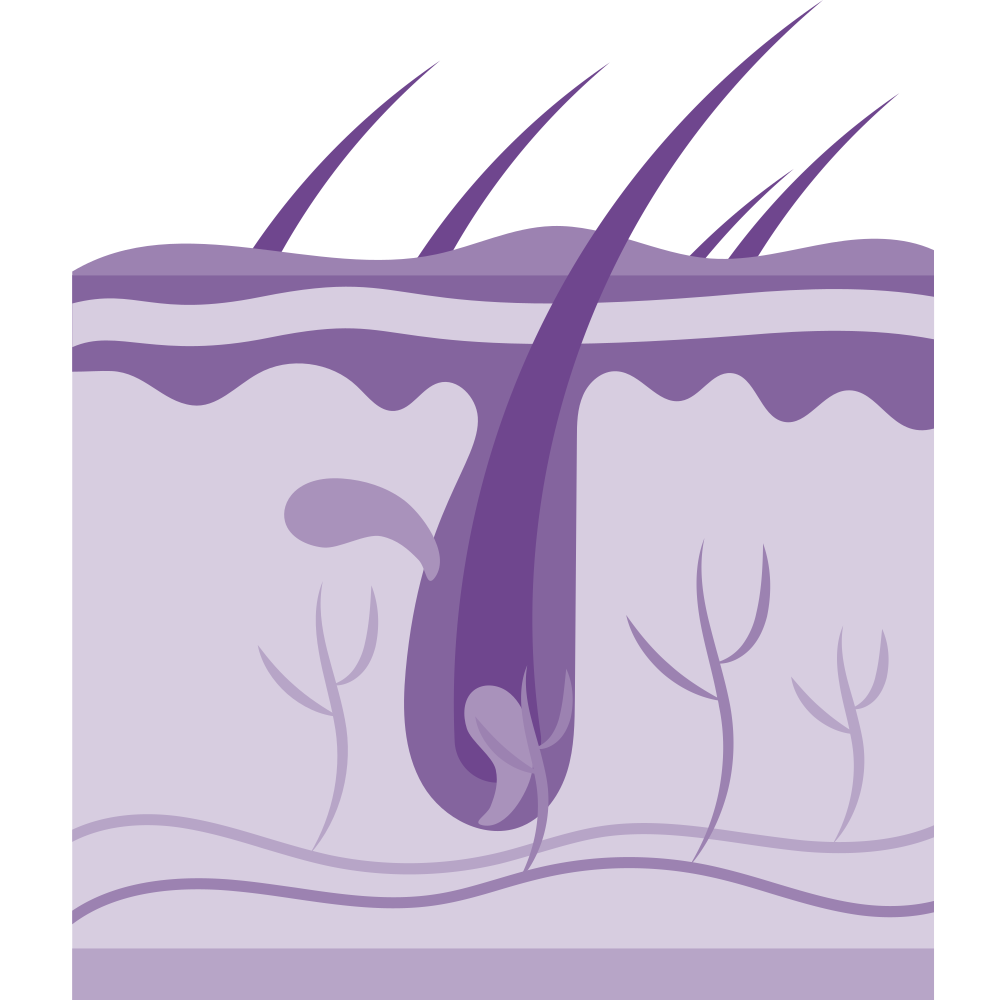
Acetyl-Hexapeptide-8 (Argireline) is a synthetic peptide based on the N-terminal region of the neuronal protein SNAP-25, which plays a key role in forming the SNARE complex necessary for neurotransmitter release. It inhibits the assembly of this complex, reducing the release of neurotransmitters such as acetylcholine and weakening small muscle contractions that contribute to expression wrinkles. Clinical studies show that topical application for several weeks can significantly reduce wrinkle roughness in humans. Animal studies also suggest it may promote structural changes in the skin, increasing type I collagen and decreasing type III collagen in aged skin 8.