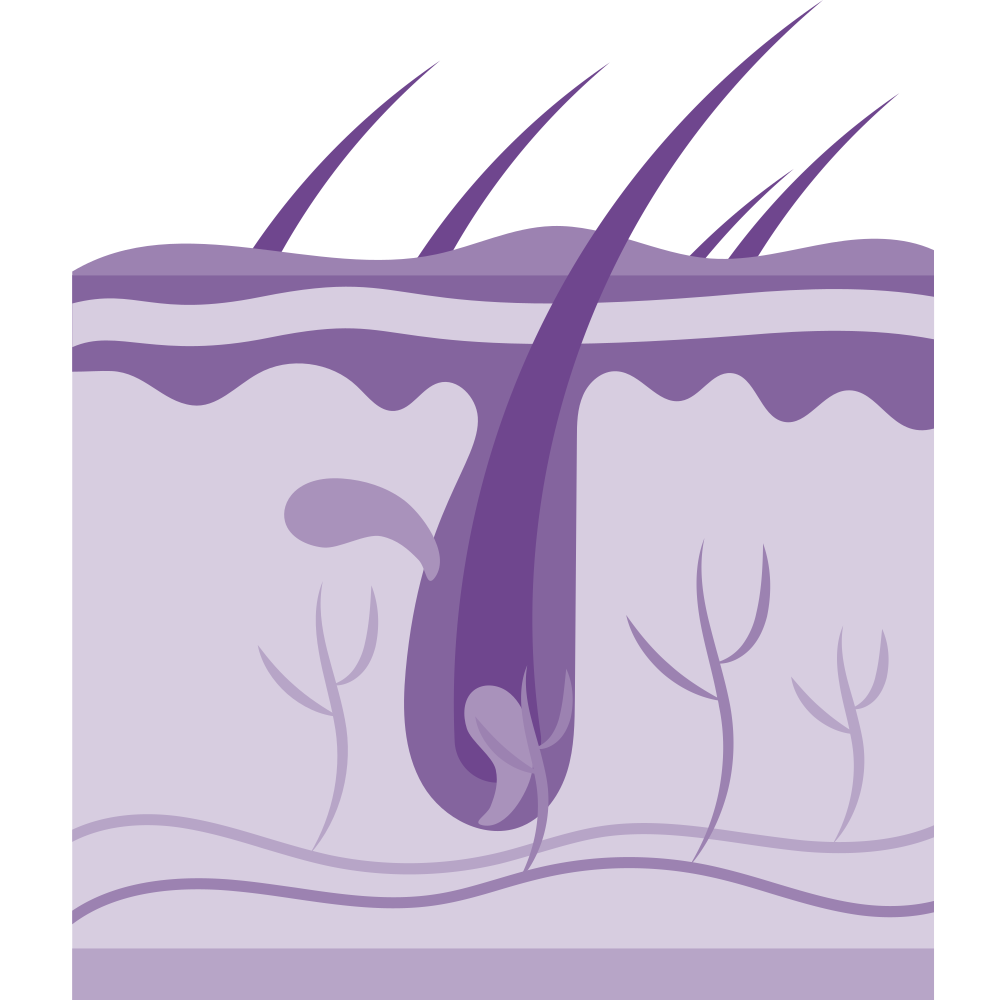
Most used for Most used for Skin, Hair, & Nails.
GHK-Cu is a naturally occurring copper peptide made up of three amino acids that bind to copper ions and support tissue repair. It was first identified in human plasma and is also present in saliva and urine, where it plays a role in wound healing and cellular regeneration. Research shows that GHK-Cu helps stimulate collagen production, improve skin elasticity, and promote hair growth.
Research use only (not for human use)
Restricted / monitored
GHK-Cu is a naturally occurring copper peptide composed of three amino acids: glycine, histidine, and lysine. It was first identified in human plasma and is also found in saliva and urine, where it functions as a carrier of copper ions essential for biological activity.
Research in both animal and human studies suggests that GHK-Cu promotes wound healing, stimulates collagen and elastin production, and supports hair growth and skin regeneration. It has also been shown to exhibit antioxidant and anti-inflammatory properties, contributing to improved tissue repair and cellular health.
GHK‑Cu has been shown in multiple animal and cell studies to accelerate wound healing by increasing fibroblast activity, collagen and glycosaminoglycan synthesis, and blood vessel formation. It also exhibits antioxidant and anti-inflammatory effects by up-regulating antioxidant enzymes and reducing inflammatory cytokines such as TNF-α and IL-6 1, 2.
In both in vitro and in vivo research, GHK-Cu has been found to stimulate the production of collagen and elastin in skin fibroblasts, thereby improving skin firmness and elasticity.It also appears to modulate gene expression broadly, influencing thousands of genes associated with tissue repair, which suggests its potential in skin remodeling and aging-related changes 3, 4. In summary, GHK‑Cu promotes wound healing, enhances skin structure, and modulates gene expression to support tissue repair and healthy aging.
There is very limited formal clinical research on the negative side effects of GHK‑Cu in humans. Some reports and manufacturer-summarised data indicate topical irritation such as redness, dryness, itching and mild allergic reactions in a minority of users. The published literature does not provide robust controlled human trial data showing systemic adverse events attributable to GHK-Cu. Some theoretical risks have been suggested in commentary materials, including possible blood pressure lowering and the concern of copper load in individuals with impaired copper metabolism. Because GHK-Cu promotes vessel growth and tissue regeneration, there is speculation (but not well-documented evidence) that it might interact with conditions of uncontrolled tissue proliferation 5.
GHK‑Cu works by binding copper ions and altering key cellular pathways to support tissue repair and regeneration. Studies show that it modulates the expression of thousands of human genes—about 31 % of genes at a ≥50 % change—thus influencing processes such as extracellular matrix remodelling, collagen and glycosaminoglycan synthesis, and metalloproteinase regulation. The peptide also promotes angiogenesis and stimulates fibroblast activity in wound-healing models, while enhancing antioxidant enzyme levels and inhibiting inflammatory markers such as TNF-α and IL-6 in animal studies 6, 7.
| Company | Score | Tests | Min Score | Max Score |
|---|---|---|---|---|
| Qing Li Peptide | 7.1 | 19 | 4.0 | 9.0 |
| Reta-Peptide | 6.1 | 13 | 3.0 | 9.0 |
| Shanghai Sigma Audley SSA | 6.4 | 8 | 5.0 | 9.0 |
| TSC Top Supplements China | 5.4 | 8 | 4.0 | 8.0 |
| HK Peptides | 4.6 | 8 | 3.0 | 7.0 |
| Peptide-S | 5.9 | 7 | 4.0 | 9.0 |
Sign up for a paid plan to view lab-tested product scores and access our verified testing data.
Upgrade Now